C. A. QUEZADA
THE ROAD TO CAERNIA
AN EPIC FANTASY SAGA
"For the road behind us. For the road before us. For those who walk beside us. We walk forevermore."
FROM THE CHRONICLES OF CAEROTH
WELCOME TO CAERNIA
A fallen kingdom. A hero's return. A dream that becomes ruin.
At the center of the trilogy lies Caernia, a proud highland kingdom of towering strongholds, sweeping valleys, humble villages, and old noble lineages. Once counted among the great human realms of Eisandor, Caernia was ultimately shattered by a great orcish horde that expunged its armies, razed its settlements, and scattered its surviving people to the wind. The fall of Caernia sent a tremor throughout the remaining kingdoms, as rival crowns began waging bitter frontier wars over its abandoned strongholds while orcish warbands continue to pillage and terrorize its survivors.The kingdom’s destruction rattles the remaining human realms already encumbered by grave threats, spurring opportunistic rulers to fighting over the fallen kingdom as each claims to be restoring order while carving one piece after another from Caernia’s rotting corpse. Orcish warbands continue to pillage the countryside, slaughtering or subjugating those who refused to flee when the horde first invaded. Refugees carry their anguish into foreign lands, leaving Caernia’s survival to hinge upon memory, inheritance, and the dwindling promise that one day, the kingdom might be restored.Among those exiles stands Willem Davenmere.At the beginning of the trilogy, Willem will be presented as the young son of a Caernian lord who stands defiant against the orcish invaders. He witnesses the destruction of his ancestral home and the death of his father before being carried to safety in the neighboring kingdom of Stahlgarde. Raised far from the highlands that birthed him, Willem grows to become a gifted knight, an accomplished leader, and the one who leads a fledgling brotherhood bound together by friendship, loyalty, and a dream of return.At first, Willem is the kind of hero around whom kingdoms are built; he is brave without compromise, unabashedly charismatic, and driven entirely by a cause that appears righteous to many. His dreams of reclaiming Caernia and restoring its scattered people are inspired by a desire to rebuild the life that exile once denied him not just for himself, but for those he grows to love and trust. His followers pledge themselves to his cause because he breathes life into the hope that ruin need not be permanent and that redemption can be seized by those with the will to claim it.The Road to Caernia is not just a tale about whether a lost kingdom can be restored; it is about what restoration means to someone whose entire identity revolves around its pursuit rather than the intended destination. Set against a wider world of warring kingdoms, ancient faiths, forgotten ruins, monstrous powers, and cultures shaped by centuries of conflict, the trilogy is ultimately the story of a man, a homeland, and the terrible distance between returning home and truly recovering all that was lost.
LETTERS FROM CAERNIA
FOLLOW THE ROAD
Receive fiction excerpts, worldbuilding essays, artwork, and behind-the-scenes updates from the creation of The Road to Caernia.
The Road to Caernia is part of a much larger worldbuilding project: the creation of Caeroth, a secondary world designed with the breadth, internal history, and accumulated detail more often associated with the great tradition of Tolkien-esque fantasy worldbuilding. The novels are only one expression of that setting. Behind them lies an expanding body of history, geography, religion, mythology, politics, heraldry, language, warfare, economics, genealogy, folklore, and cultural development intended to make Caeroth feel less like a backdrop for a single story and more like a world that existed long before its characters entered it.That process has unfolded over many years and continues alongside the writing of the novels themselves. Kingdoms have acquired centuries of political history. Religions have developed competing doctrines, saints, orders, rituals, and ancient schisms. Wars leave consequences that shape generations. Noble houses possess their own heraldry, rivalries, marriages, and claims. Magic is treated as a historical and intellectual tradition rather than a collection of convenient abilities. Even elements unlikely to appear directly on the page are developed so that the visible story rests upon foundations extending far beneath it.The project is therefore intended to grow far beyond a single trilogy. The Road to Caernia provides the principal narrative, but Caeroth is being constructed to support histories, maps, artwork, legends, character studies, supplemental fiction, and stories set in entirely different periods and regions.That development is documented in full on my Substack, where readers can follow Caeroth as it is built: from early concepts and discarded ideas to revised histories, cultures, maps, artwork, excerpts, and the creative decisions that gradually bind thousands of individual details into a coherent world.
Published once or twice each month, free of charge. No clutter, no constant promotion, just fantasy writing and worldbuilding delivered to your inbox.
THE ARCHITECT OF CAEROTH
ABOUT THE AUTHOR
C. A. Quezada is a U.S. Air Force veteran, fantasy author, and lifelong worldbuilder. The world of Caeroth began with characters and stories he created through roleplaying in games like WoW, TESO, and SWTOR as a teenager. Over the years, those scattered stories gradually outgrew their origins and became something independent: a secondary world with its own history, cultures, faiths, and conflicts stretching across centuries.Quezada is the author of The Road to Caernia, an adult epic-fantasy trilogy set within that world. Its first novel, The Son of Ruin, is a coming-of-age story that follows Willem Davenmere from a child fleeing the destruction of his homeland to a young knight forced to decide what, and whom, he is willing to become in order to reclaim it. The trilogy continues with The Sword of Deliverance and The Desolate King.Inspired by writers ranging from Bernard Cornwell to J. R. R. Tolkien, his fiction combines medieval realism with the scale and wonder of high fantasy. At the center of it, however, are the people who inhabit that world and the consequences their choices leave behind. Wars may decide the fate of kingdoms, but their meaning is found in the friendships they strain, the families they divide, and the lives permanently altered by them.He is currently revising and planning on querying The Son of Ruin while continuing to expand The Chronicles of Caeroth through fiction, maps, artwork, character studies, histories, and worldbuilding. His larger ambition is to make Caeroth a setting expansive enough to support stories—and perhaps something more in the distant future—far beyond a single trilogy.
The Chronicles of Caeroth
The Road to Caernia
© 2026 C. A. Quezada. All rights reserved.
Art by William R. Liberto
A WORK IN PROGRESS
READ THE SAGA
Enter the world of Caeroth through the wars, legends, and lost kingdom of Caernia.
| Title | Book | Year |
|---|---|---|
| The Son of Ruin | I | 2027 |
| The Sword of Deliverance | II | TBD |
| The Desolate King | III | TBD |
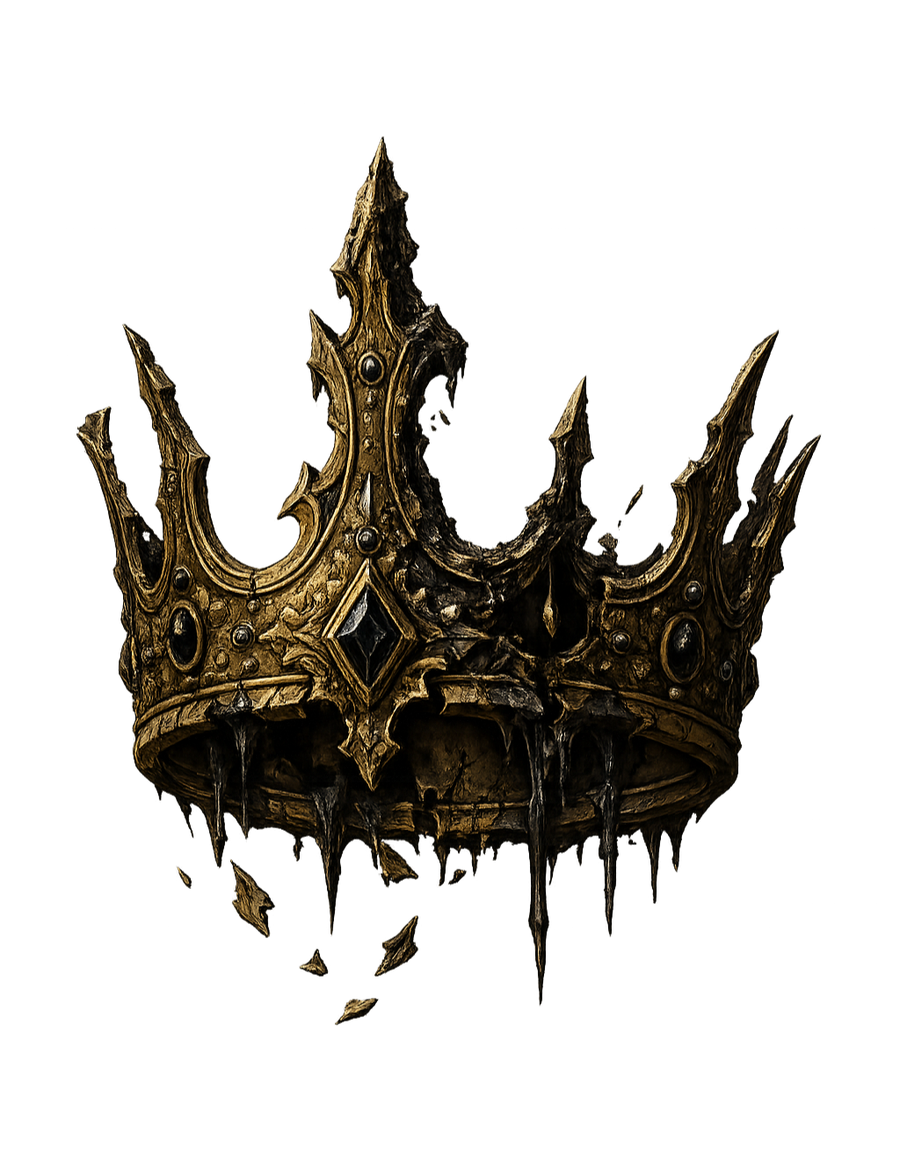
Across three books, The Road to Caernia will feature Willem's rise from a dispossessed exile to become a liberator and a legend. His virtues carry him further than anyone in his early life believed possible. Courage translates to victory. Loyalty evolves into brotherhood. Conviction becomes purpose. Yet the qualities that make him heroic are not immune to becoming warped by the grief that he carries; as the years pass, the dream of return begins to demand more from him, and the widening chasm between reclaiming a homeland and retaking a future denied to him becomes increasingly impossible to ignore. At its heart, this trilogy will explore the concepts of friendship, love, ambition, and grief that provide meaning to any good story. The notion of sacrifices that people make when loss forces them to decide between what must be preserved, what must be surrendered, and how to move on after the choice is made is something intimately human and relatable to our day-to-day lives; everyone experiences loss, just as everyone copes with it differently. That trope will be expressed through a noble purpose becoming inseparable from the wound that incurred it, whether success can ever satisfy a person who forever commits themselves to the pursuit of something ultimately unattainable, and whether returning home is the same thing as recovering what home once meant.The Son of Ruin follows Willem’s youth in exile, his rise from dispossessed noble to accomplished knight, and the bonds of brotherhood that will one day carry him home. Drawing on coming of age, found family, knight-errant, and exiled heir tropes, the novel traces the years in which Willem’s courage, loyalty, and charisma first begin to shape his legend. Yet beneath the promise of adventure and fellowship lies the unresolved wound of Caernia, shaping every oath he takes and every future he imagines. By the book’s end, Willem must choose between the secure life offered to him in Stahlgarde and the impossible road back toward the kingdom that made him an orphan.The Sword of Deliverance chronicles Willem’s return to Caernia, the gathering of its scattered people, and the violent struggle to liberate a homeland that has spent years beneath foreign occupation. It embraces the long-awaited homecoming of an exiled hero and his campaign of reclamation, placing Willem at the helm of victories that transform him from a promising commander into the living symbol of a nation’s rebirth. Alongside his brotherhood, he reclaims ruined strongholds, confronts the enemies responsible for Caernia’s fall, and fulfills promises made in exile to the living and the dead. Yet even at the height of triumph, the first cracks appear in his understanding of restoration, as each victory teaches him to answer loss with greater conquest.The Desolate King begins after the heroic ending such stories usually promise, when the exile has returned, the kingdom has been restored, and the liberator has been crowned. Built around the fall of a hero into a corrupted king, the novel turns victory without peace into a war between brothers. It follows Willem as grief, uncertainty, and the fear of losing everything again drive him beyond the borders of the realm he once sought only to save. Former companions become enemies, old loyalties fracture, and the brotherhood that made his legend is forced to decide whether devotion to Willem requires obedience or resistance. What began as a war to reclaim a home ends in a final reckoning between the king Willem became and the people who still remember the man he once was.
The Chronicles of Caeroth
The Road to Caernia
© 2026 C. A. Quezada. All rights reserved.
Art by William R. Liberto
THOSE WHO WALK THE ROAD
MEET THE CHARACTERS
"We swear tonight not to crowns, nor glory, nor vengeance alone, but rather to the people who still remember Caernia as home."
Drawn from distant lands bearing divided loyalties and carrying lives that might have never otherwise crossed, the founding members of the Order of Saint Hadren form an unlikely union of exiles and survivors. From a dispossessed noble to a second son, a craven brute to a calming light, a greedy sellsword to a loathed bastard, this was not a fellowship meant to withstand the trials and tribulations of the quest that awaits them. And while some are bound by blood, others look to friendship, duty, or grief as their justification for loyalty, while all pledge themselves to a just cause of reclamation. With each individual fulfilling a specific archetype and embarked upon character arcs explored throughout the saga, the experiences they share and the bonds they forge will become immortalized as their deeds transcend into legend. It all begins when they first swear themselves to follow the road back to Caernia, their oath setting in motion the events that will irrevocably alter the course of Eisandric history forever.
LORD WILLEM DAVENMERE
The Exile
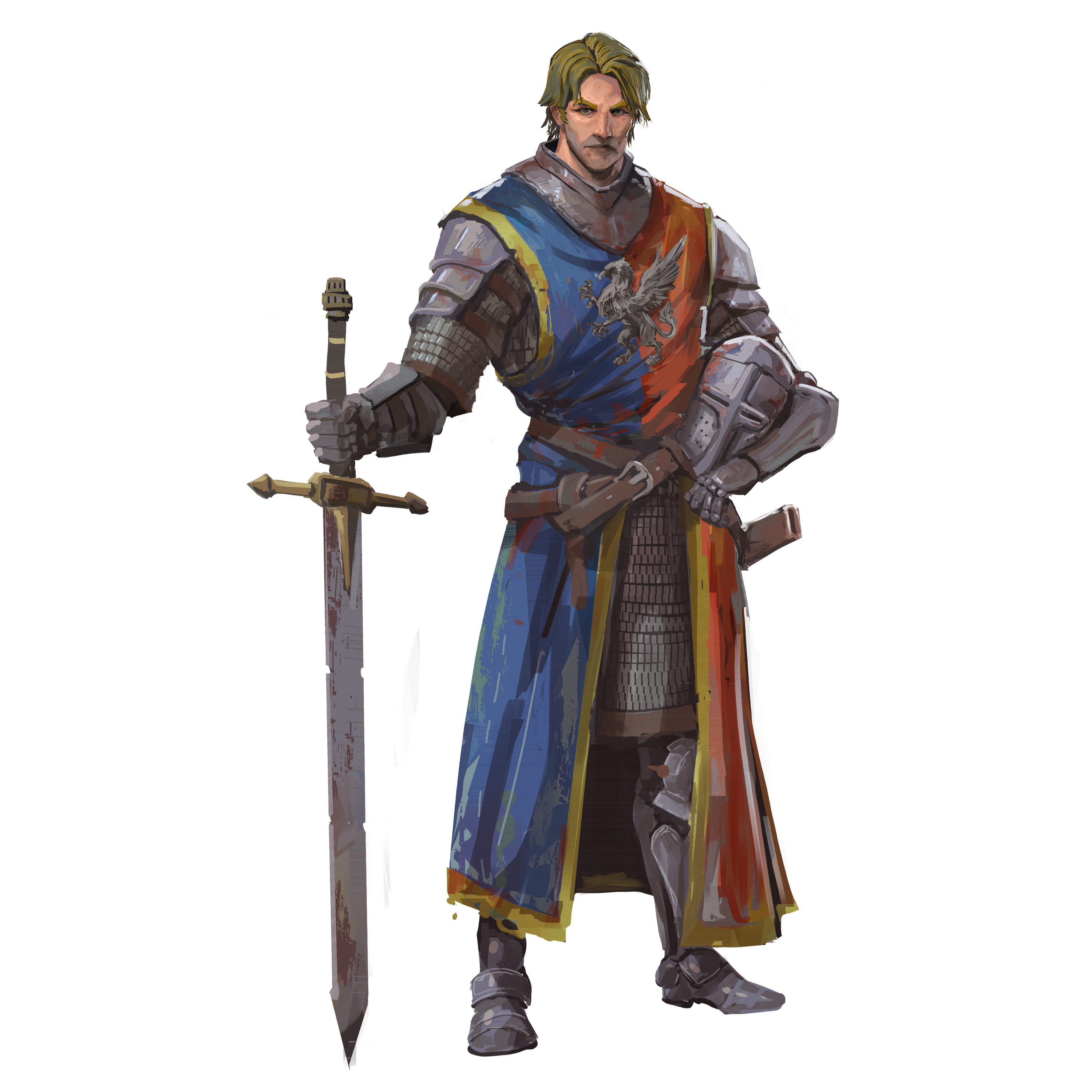
A dispossessed Caernian lord raised in the foreign courts of Stahlgarde, Willem transforms a childhood defined by ruin into a lifelong vow of return. Charismatic, courageous, and tactically gifted, he becomes the heart of the Order of Saint Hadren and the mythical figure around whom Caernia's scattered people rally around. Yet that same certainty that forges him into the legendary liberator of the kingdom gradually leaves him unable to distinguish restoration from conquest or devotion from obsession. His ascension and subsequent fall from grace is the overarching plotline of the series.
Sir Hannes Brynholdt
The Guardian
Willem's closest friend since childhood, Hannes is a paladin, master swordsman, and the second son of a middling Stahlish family. His loyalty to Willem, stemming from time spent together during their childhoods, is ultimately strengthened by the bonds of brotherhood, shared history, and Willem's eventual marriage to his sister. Honorable without being naïve and unflinching in his resolve, Hannes becomes the Order's moral center to ensure their quest remains righteous. As Willem's ambitions darken, he must decide whether true loyalty means standing beside his brother or standing up for what he once represented.
LADY ELSBETH BRYNHOLDT
The White Rose
Elsbeth is Willem's childhood companion, eventual wife, and the emotional heart of the epic journey that unfolds. Where Willem dreams of reclaiming territory, she gives the return its deeper purpose: a home rebuilt, a family restored, and a future made possible after exile. Intelligent, compassionate, and quietly resolute, Elsbeth's influence transcends the brutal simplicity of Willem's ambitions. Her presence shapes the Order's earliest ideals and keeps them emotionally grounded, while her fate alters Willem's understanding of victory and his place in the world forever.
Cynric of Aldenwall
The Steward
Once steward to House Davenmere, Cynric carries Willem and his mother from the ruins of Aldenwall, their ancestral home, and becomes the closest thing that the exiled boy has to a surrogate father. He fulfills many other roles throughout Willem's life, ranging from archivist to administrator, counselor to confidante, and the keeper of practical knowledge required to turn longing into reclamation. Cynric believes in Willem's cause, but understands better than most what the journey truly demands. His devotion is steadfast, though never blind to the cost of return.
Sir Dietrich Denholm
The Soldier
A lowborn Stahlish knight who earned advancement through merit and discipline rather than inheritance, Dietrich is the Order's consummate professional soldier. Initially manuevered near Willem to be an observer for the Stahlish crown, he gradually abandons political obligation for personal loyalty. Methodical, diligent, and dependable under pressure, Dietrich becomes instrumental to Willem's martial campaigns and the architect of his many victories. He remains faithful to the bitter end, embodying the epitome of loyalty through obligation even as the cause he once judged righteous begins to change.
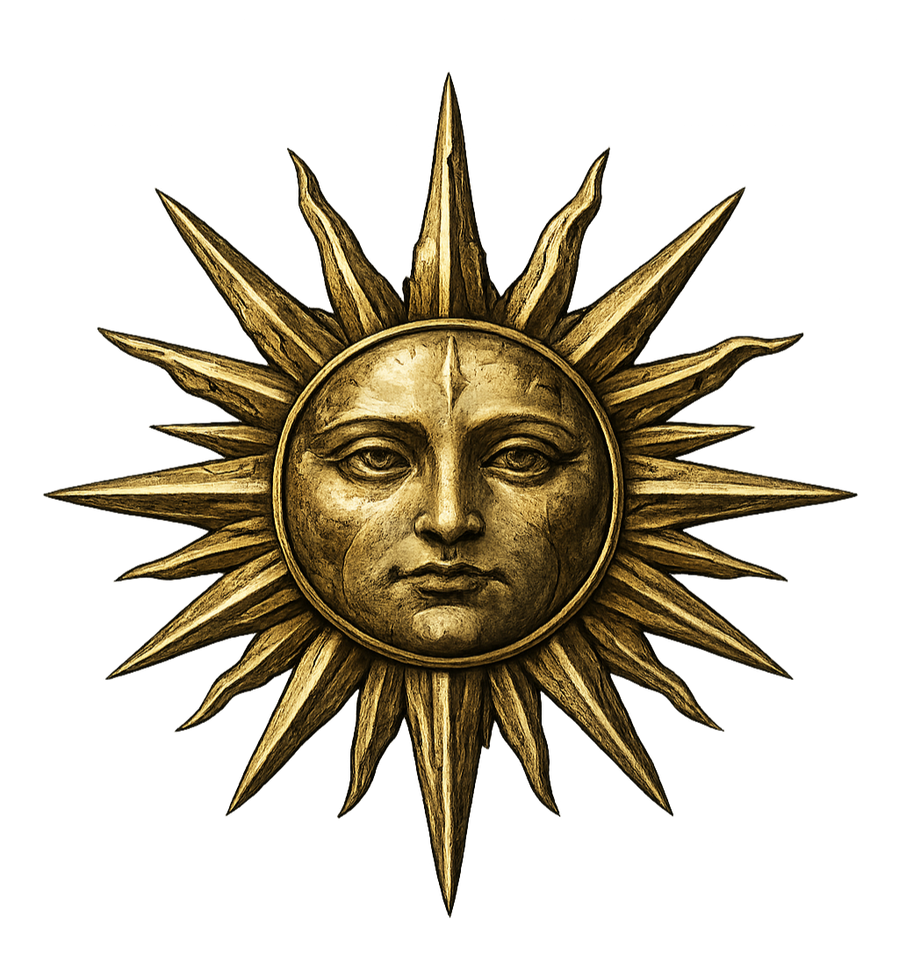
Dame Milena Theleska
The Cleric
A heavily-armored cleric from the far-flung kingdom of Nordovia, Milena earned renown during the horrors of the Second Deadwinter and carries its scars beneath a visage of confidence and radiance. Known as the Northern Sun, she combines her martial ferocity with her unwavering spiritual conflict, serving as both warrior and guardian within the Order. Her bond with Hannes is founded upon mutual trust and shared faith; as the fellowship fractures and the story approaches its climax, Milena must defend its original ideals against the man who once embodied them.
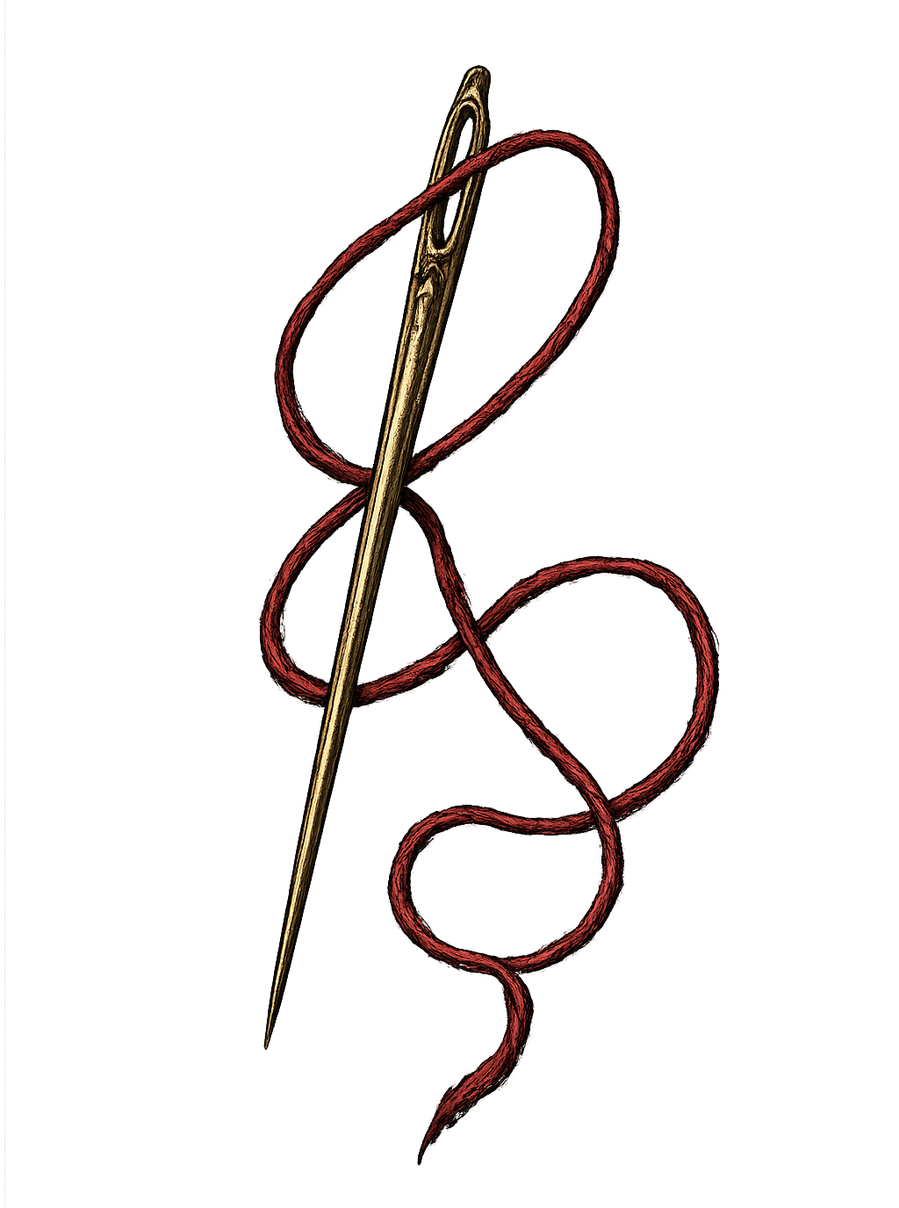
Roseline Wulfe
The Physician
A Rivemontine physician whose sharp tongue is matched only by sharper judgment, Roseline joines Willem and his companions after confronting the brutal reality of what soldiers leave behind as their conflicts ravage everything. Practical, skeptical, and fiercely protective of those placed within her care, she refuses to romanticize either war or heroism. Roseline becomes the Order's foremost healer and one of its clearest voices of conscience. Her loyalty ultimately extends beyond Willem himself to the family and future that is threatened by the misconstruing of destiny.
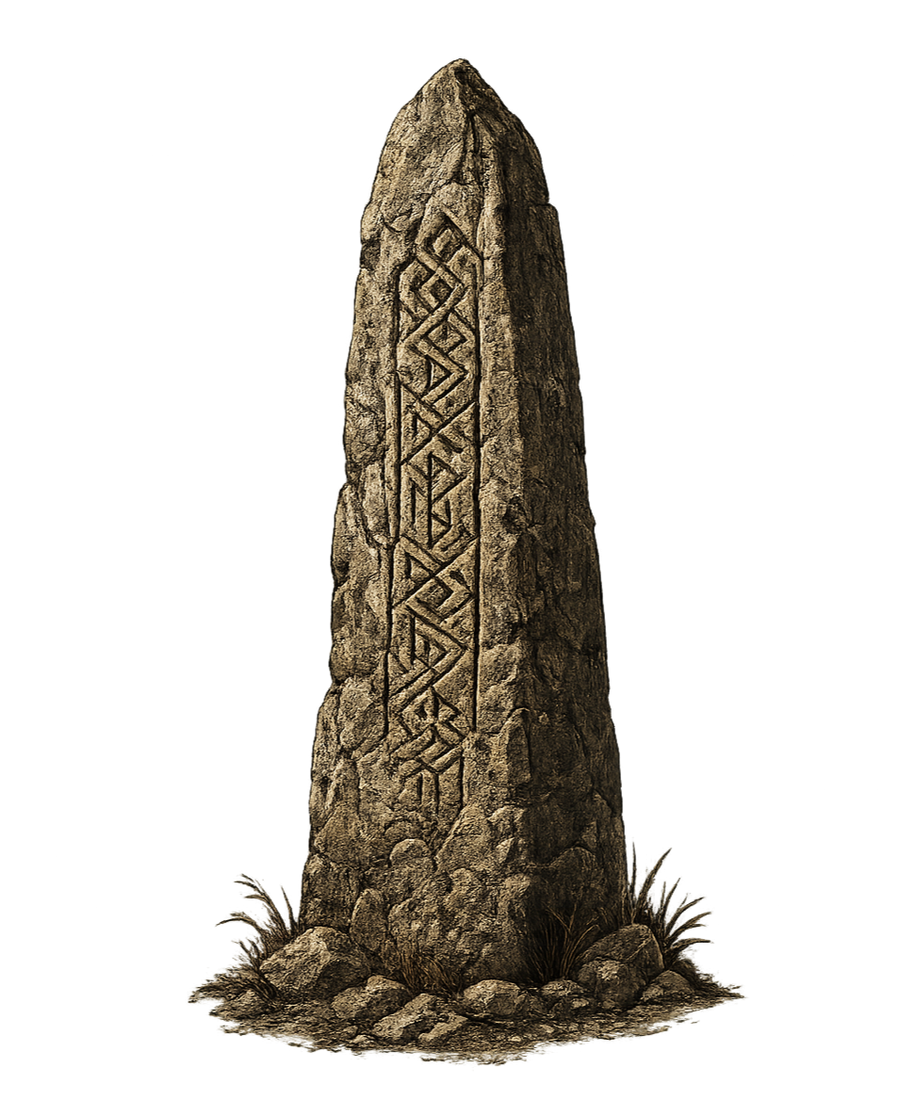
Grunvir of Grannoch
The Highlander
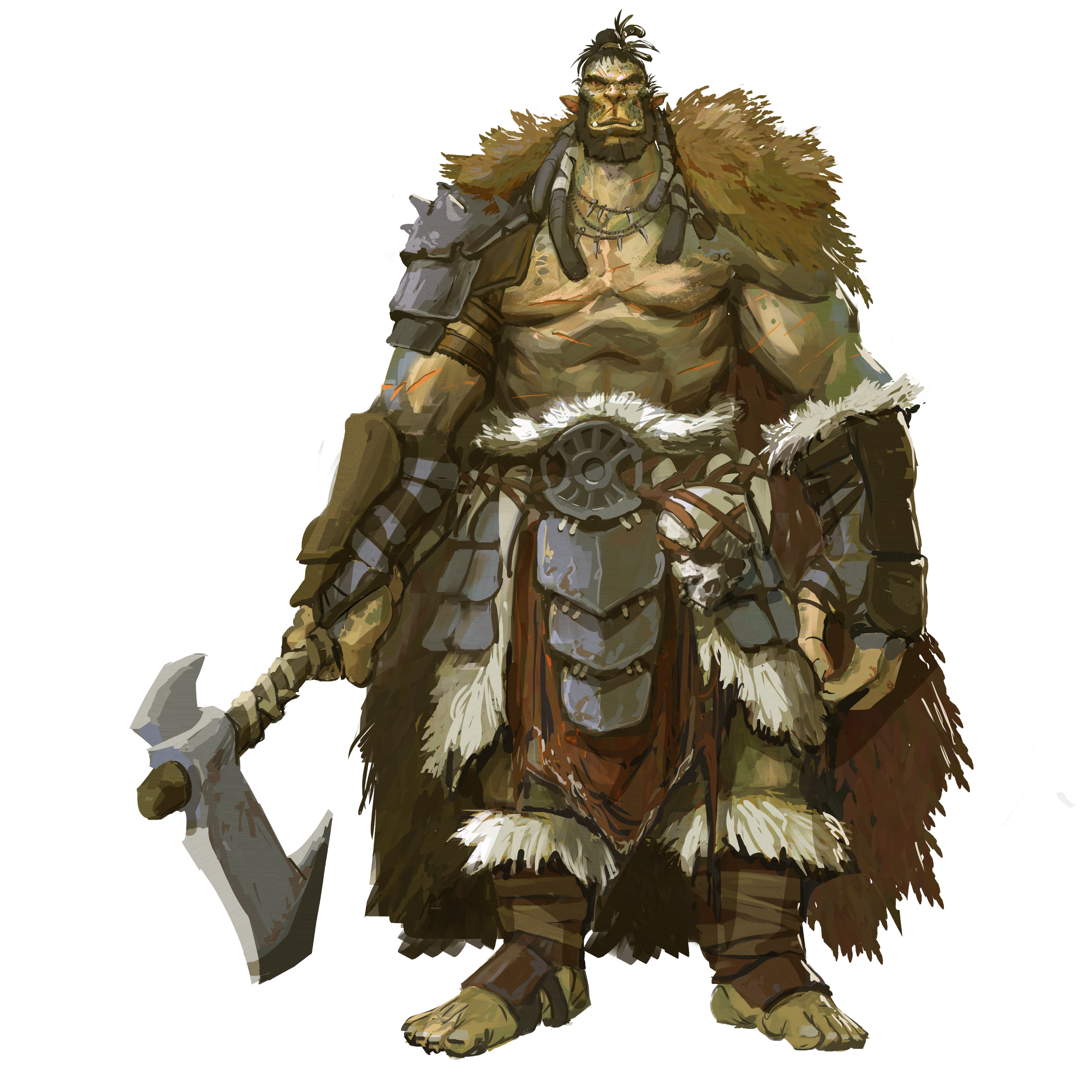
As the last survivor of Clan Grannoch, Grunvir was captured during the invasion and endured years of orcish captivity before returning to a land that had nearly forgotten him. Marked by imprisonment and burdened by shame, he appears fearsome as a lumbering giant among hardened warriors. Beneath that brutality lies a man desperately seeking redemption after his survival stripped everything of meaning from his life. In Willem, Grunvir finds both a leader and the promise of vengeance, binding himself to the reclamation with an allegiance that proves nearly impossible to break.
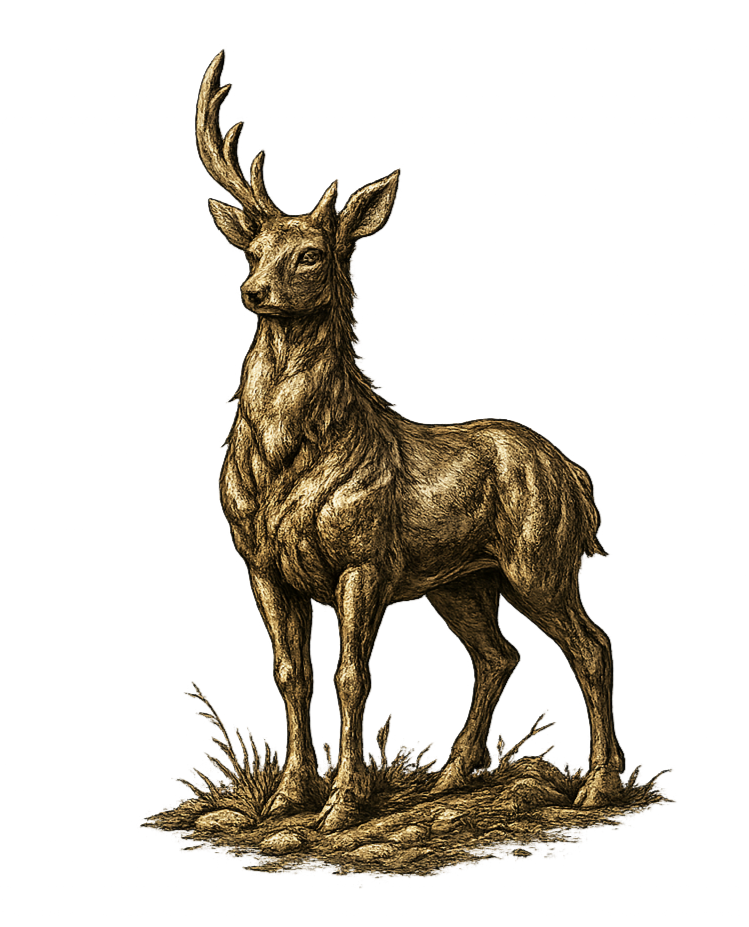
Sir Roderich "Rudi" Borhardt
The Bastard
The disinherited bastard of an Osteric noble house, Roderich is a knight of immense strength, volatile courage, and effortless gregariousness. He joins Willem carrying equal measures of grievance, ambition, and hunger for belonging. Roderich's recklessness makes him dangerous, but his loyalty, once earned, is unmistakably genuine. His personal struggle against the family and inheritance denied to him eventually becomes inseparable from the greater wars surrounding Caernia, binding the fate of foreign kingdoms that once sought to conquer the highlands to the Order's divided future.
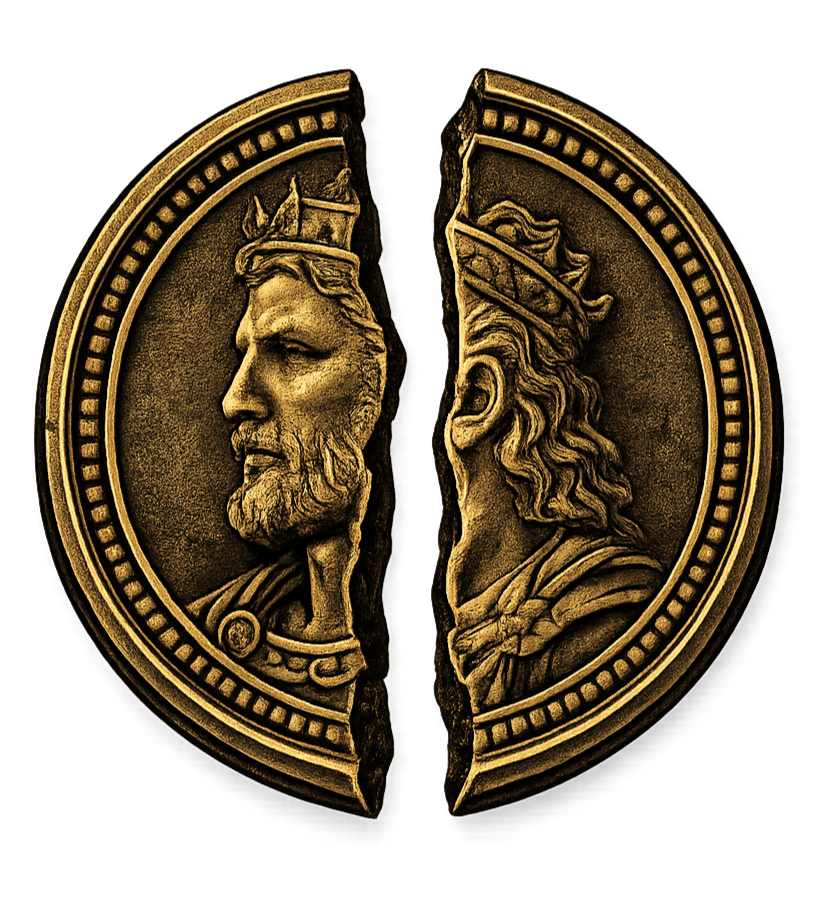
Cassian al-Meshari
The Sellsword
A Zaharian ranger and sellsword far from his home on the Gilded Coast, Cassian brings the Order a skillset its intrepid knights often lack: scouting, infiltration, and a roguish instinct for unconventional solutions to the many problems their quest incurs. Witty, adaptable, and difficult to impress, he initially measures causes by the likelihood of their success rather than the nobility of their purpose. His growing commitment to the fellowship soon reveals a deeper loyalty beneath his rugged, unapathetic exterior, though that loyalty belongs to its people and its principles rather than any singular leader.
The Chronicles of Caeroth
The Road to Caernia
© 2026 C. A. Quezada. All rights reserved.
Art by William R. Liberto
The Realms of Eisandor
Discover the WORLD
Discover the kingdoms, peoples, and powers that shape the landscape of greater Eisandor.
Across Eisandor, power is divided among kingdoms, confederations, and realms whose borders were drawn by conquest, competing faiths, and a bitter struggle for survival. The Seven Kingdoms of Man dominate the continent's heartlands, although they share neither a common government nor a common fate in the wake of Aldemar's demise. Stahlgarde and Osterach wage war over the corpse of fallen Caernia. Nordovia rebuilds from the devastation of the Second Deadwinter. Rivemont risks open way with the mysterious Sylvarin of Eldervorn, while Valleroy has withdrawn behind the silence of its sovereign duchies. In Brackland, two rival crowns preserve a peace scarcely removed from civil war.Beyond them stand powers no less consequential. The Free Cities of Zahar command caravan roads and enormous merchant guilds to amass wealth unimaginable on the Gilded Coast, while the Qadaran Admiralty contests the southern seas through naval superiority and island dominion. In the far north, the Vargyr endure beneath the shadow of the Pale, where the harshest of winters are just one of many dangers that afflicts the frozen tundra.The dwarven peoples stand divided among the great mountain holds, the Eisandric hinterlands, and the strongholds of the Red Hills, each preserving a distinct inheritance from the Everdeep. Theelven heirs of the Aelvar have likewise diverged: the Aelvarin remain the sovereign rulers of Vaeloria, the Sylvarin dwell beneath the living canopy of Eldervorn, and the Thalorin sail in the scattered fleets of drowned Thaelassar. To the far east, the worg-mounted Tûmaghai orcs roam across the open steppe, while their estranged Dûrakhai kin have carved out mighty fortresses within the bowels of the Ashen Peaks.
The Eight Kingdoms of Man
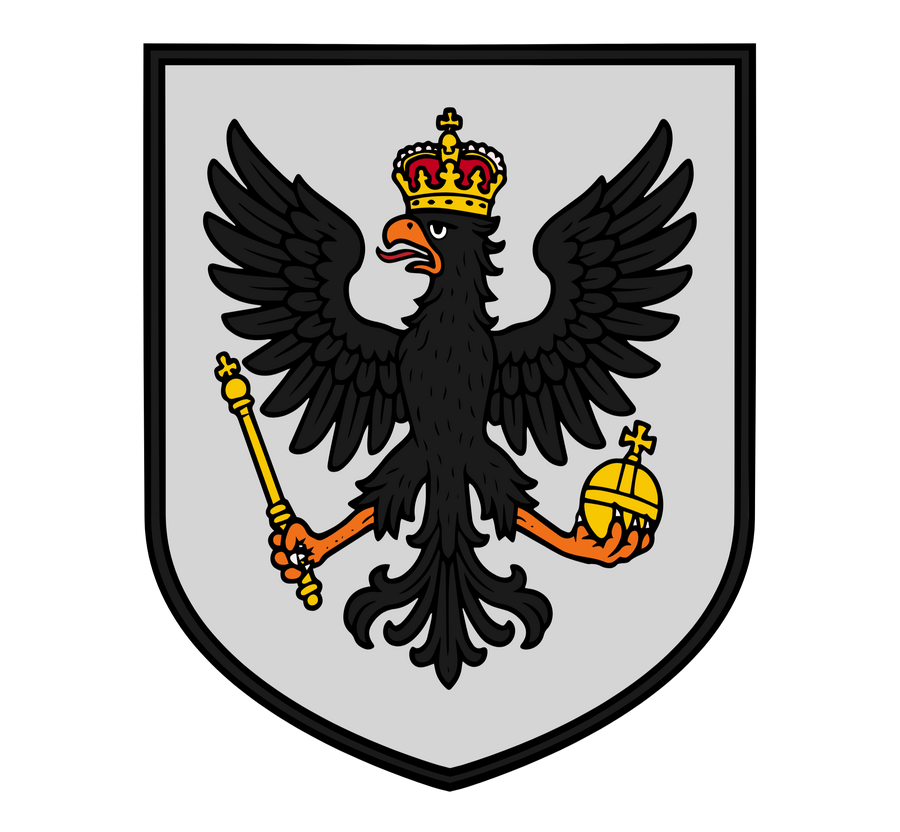
Stahlgarde
Kingdom of the Crownlands
Stahlgarde is the most centralized of the Eight Kingdoms, ruled by King Emmerich from the city of Stahlburg. Royal law is enforced through appointed officials, heavy taxation, and imperial institutions that reach far beyond the capital. The kingdom occupies broad plains, river valleys, dense farmland, and the Crownsroad that snakes through the old Empire. Stahlburg serves as home to both the Cathedral of the Ten Sanctums and the Tower of Orentia, cementing itself as the heart of human religion and academia. Stahlgarde remains the strongest human power in Eisandor, although its ancient authority is increasingly questioned by neighboring realms. For many years since 1587 S.C., they have been waging war against the kingdom of Osterach for dominion over the ruins of Caernia in what has infamously been named "The Carrion War."
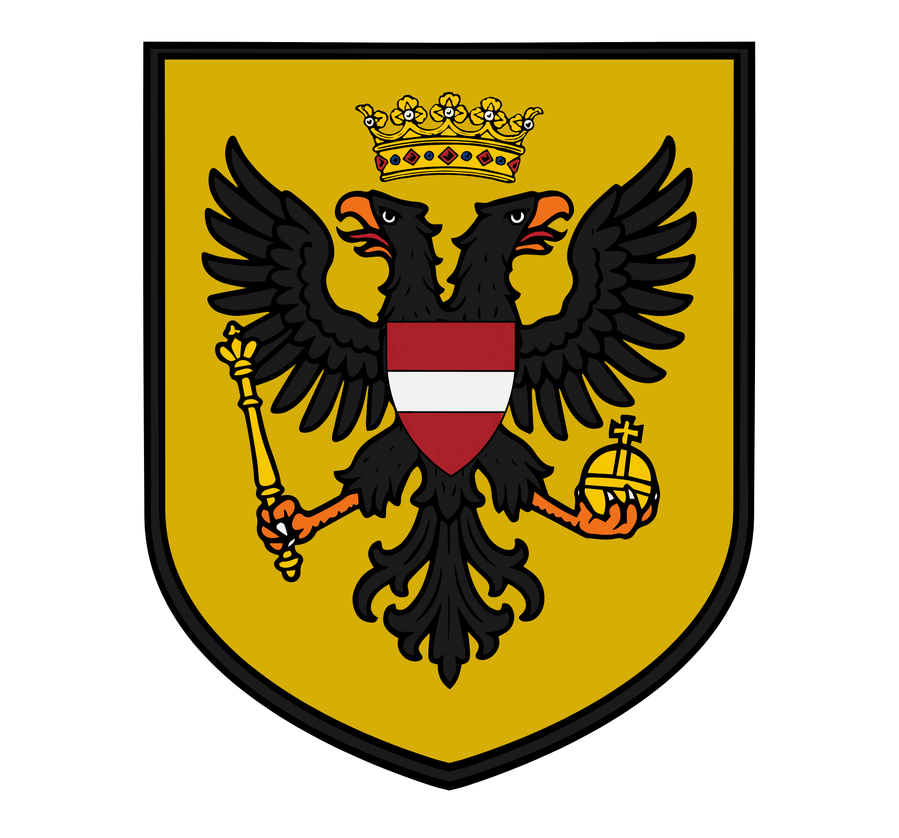
Osterach
Archduchy of the Vale
Osterach is a ducal realm ruled by the Archduke Leopold IV from the city of Veynmark, with the Alderhorst Palace serving as the seat of his royal household and the court that serves him. His authority is tempered by powerful ducal estates, provincial assemblies, a divergent branch of the Concordant Church, and a deeply-rooted legal-administrative tradition that dominates the political landscape. The realm occupies steep valleys, forested uplands, and mountain settlements that sits at the crossroads between Nordovia, Stahlgarde, and Caernia. Osterach remains a highly orderly and prosperous region, though its stability depends upon constant negotiation between the ruling dynasty and the entranched powers beneath it. They continue their war against Stahlgarde over the corpse of fallen Caernia, intent upon annexing their southern neighbors into the Vale.
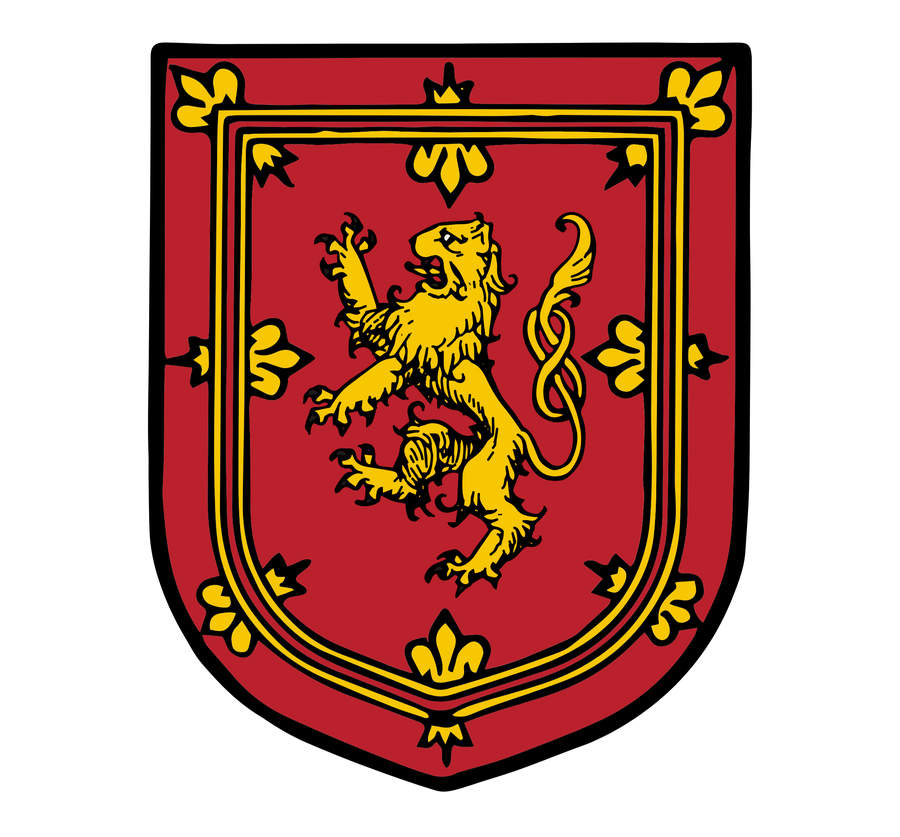
Caernia
Kingdom of the Highlands
Before its fall, Caernia was an elective highland monarchy whose monarch, King Leoric of House Maelor, was acclaimed by the great lords and chieftains of the highlands. Royal power depended less on bureaucracy than on personal allegiances, martial reputation, customary law, and support negotiated with one's neighbors. The kingdoms lies among a sprawling mass of lochs, moors, verdant valleys, and ancient strongholds, with the once great city of Dunhaven at its heart. Caernians are a proud and independent peope, fiercely loyal to their homeland and the heroes that carved their legacies into its foothills. In 1572 S.C., Caernia was invaded by a mighty orcish horde that shattered the kingdom. In the present day, its cities have been sacked and its people scattered, yet the stalwart Caernians cling to the dwindling hope that the kingdom shall one day be restored.
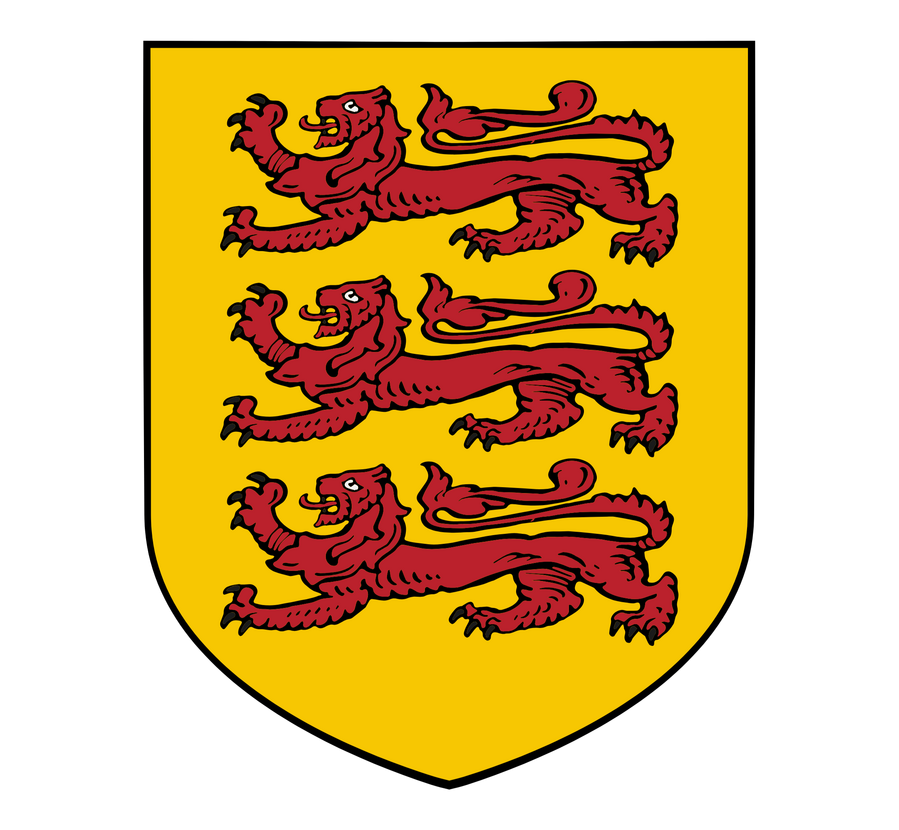
Brackland
Kingdom of the Lowlands
Brackland is best defined as a dual monarchy held together by a fragile compromise between Bellendam, the historic capital of the kingdom, and Brugwalde, the home of a mutinous coalition of noble houses that sparked a great succession war in the land. Each region keeps its own laws, institutions, and estates, while the warring kings prevent the ongoing stalement from collapsing back into open conflict. The kingdom largely occupies marshes, reedlands, tidal rivers, and the low coastal plains of the south. Bracklanders are hardened by the poor ground of their unariable home, the constant flooding that transforms rivers into existential threats, and the bitter local loyalties of middling houses. The realm is still scarred by the Night of Black Reeds of 1605 S.C., when King Othric III and the royal lineage of House Bellamere was brutally massacred by political rivals.
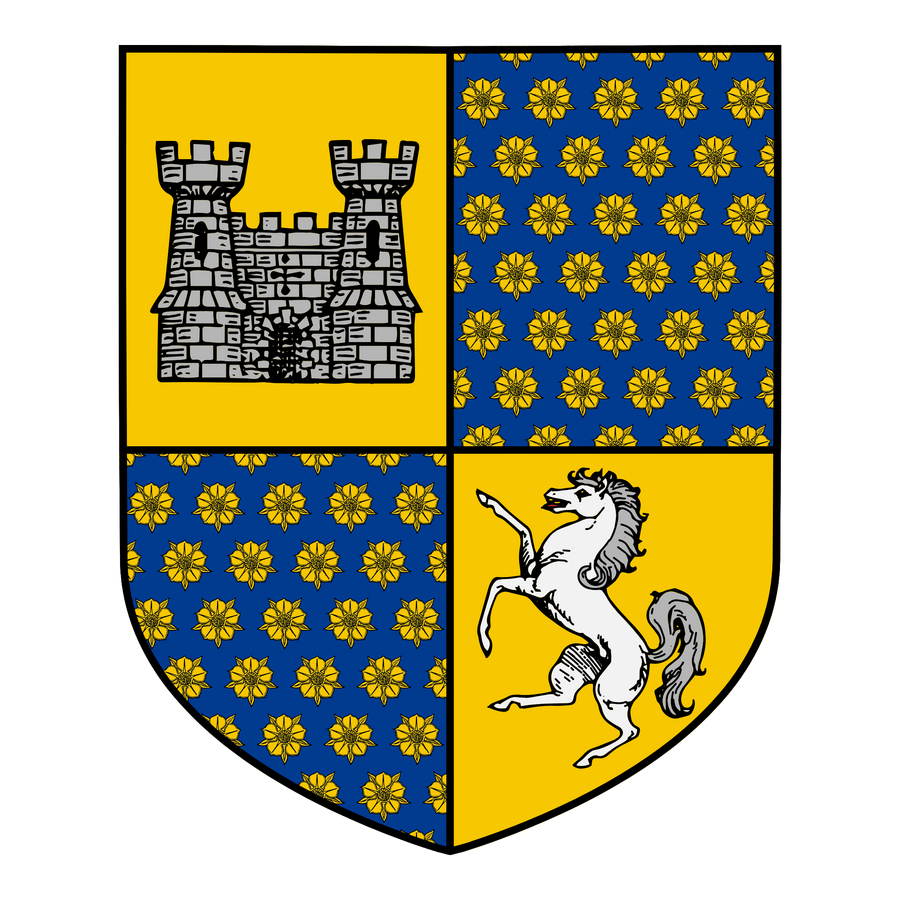
Valleroy
Duchies of the Reach
Valleroy is the wealthy southern realm of fertile countryside, prosperous towns, and proud chivalric traditions. Once ruled by kings, it is now led by a confederation of largely autonomous duchies whose rulers gather in council when common danger demands cooperation. Its nobles famously prize elegance, ceremony, horsemanship, and martial reputation, while its chevaliers among the Valleroyan knights and the Rosean lances preserve the legendary prestige their knightly traditions have accrued across countless conflicts. Valleroy's long rivalry with Stahlgarde, particularly during the Hundred Banners War, remains central to its political identity and inherited grievances. In the year 1587 S.C., the great duchies of the Demesnes have withdrawn from the world, closing their borders for reasons that have long eluded the scrutiny of their neighbors.
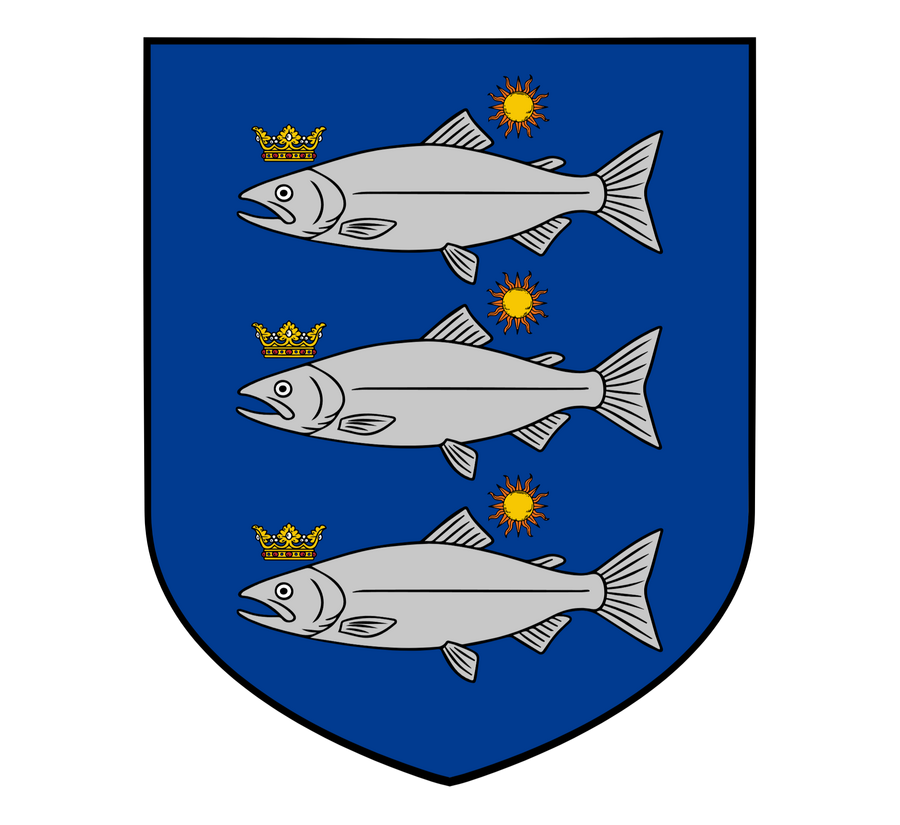
Rivemont
Kingdom of the Riverlands
Rivemont is ruled by King Aldren the Shrewd from the city of Marenfeld, who governs alongside the chartered towns, merchant guilds, and wealthy commercial estates situated upon waterways that dominate much of the maritime trade with the rest of Eisandor. The kingdom is a vast land of fertile floodplains, river islands, and busy ports that regularly interact with the high elves of Vaeloria, traders from the Gilded Coast, and the Qadarans of the desert isles. Because of this, Rivemont has cultivated a culture that is practical and prosperous. It remains secure, although its wealth and strategic crossings have rendered it a constant object of tense diplomancy. In the year 1593 S.C, northward expansion into Eldervorn has pitted them against the wood elves of the immense forests bordering the region, which threatens to devolve into total war.
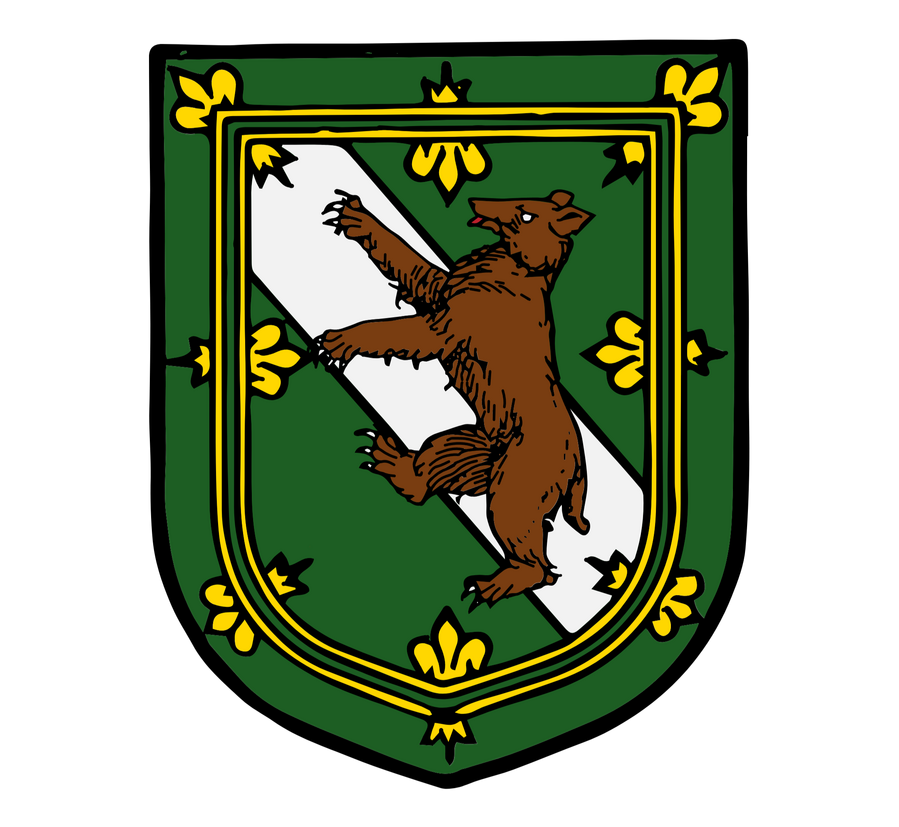
Nordovia
Khzardom of the North
Nordovia is ruled by Khzar Mikhail III from the fabled Sevenwinter Citadel in Borinograd, where he commands with a mostly autonomous authority that is constantly challenged by the boyar houses and Kossar freeholders of the realm. These estates retain their own lands, martial followings, and regional influences. Nordovia stretches across vast tundra, boreal forests, and the cold frontier facing the frozen plains of the Pale. Its people are renowned for their endurance and bluntness, commonly attributed to the strong military traditions that have shaped their culture. The kingdom remains formidable, but its strength is constantly tested by harsh winters, internal aristocratic rivalries, and threats from the far north. They are still rebuilding after the Second Deadwinter of 1585 S.C., when hordes of undead crossed the Spires of Theodran and laid waste to the kingdom.
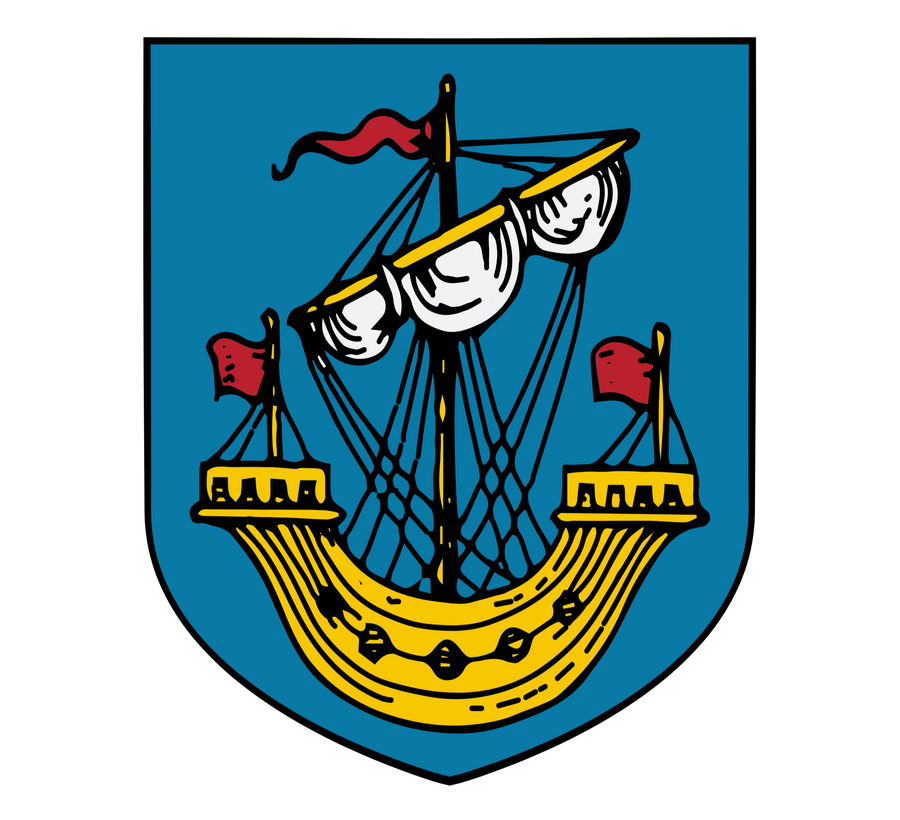
Dalrath
Kingdom of the Isles
From the sea-walled city of Morran, King Tiernan IV rules over the kingdom of Dalrath and the unruly realm of island lords and coastal freeholders that make it their home. Spread across a broken archipelago south of the mainland, Dalrath is a harsh country of rocky shores, windswept moors, and storm-beaten islands where ships remain as essential to war and livelihood as horses and castles are elsewhere in Eisandor. Its people are renowned largely as raiders and pirates, preserving martial customs that mainlanders often regard as relics of a more violent age. Though diminished from the centuries when Dalrathi warbands terrorized the southern coasts, the kingdom remains dangerous in its own waters, where its captains know every reef, channel, and hidden anchorage. They have few friends and countless enemies, most of all the Qadarans and the Thalorin.
The Southern Powers
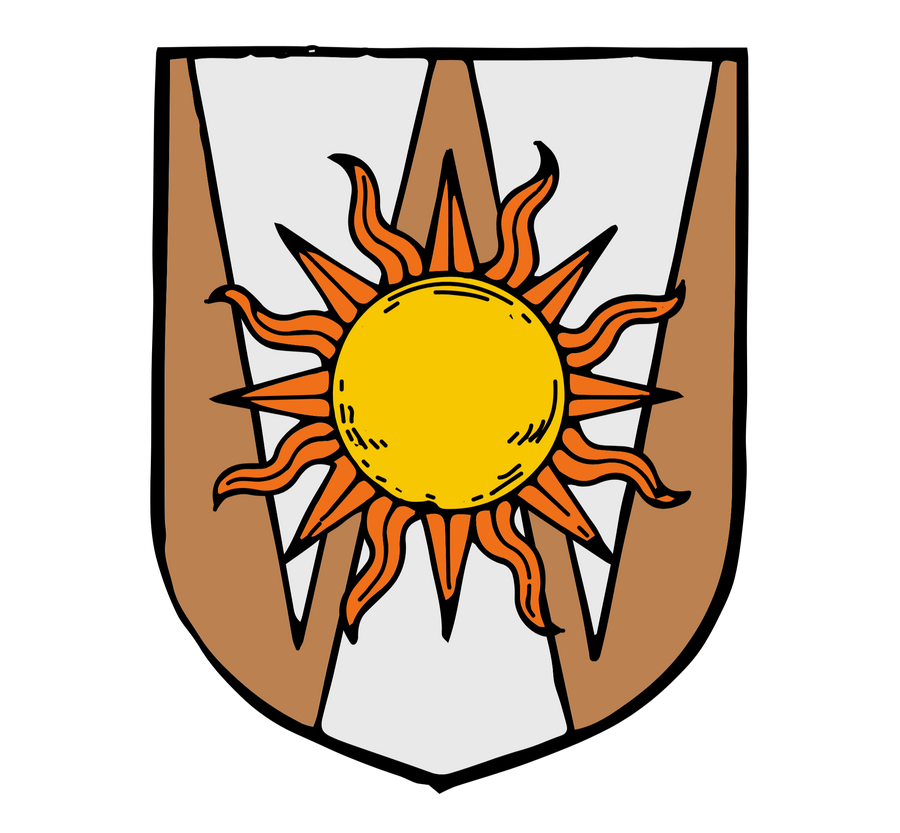
Qadara
The Desert Isles
Qadara is the great southern martime power of sun-baked coasts, golden harbors, and towering mosques of the seas to the far south of the Eisandric kingdoms. It is ruled by the Sahram, Ardashan the Sun-Crowned, through the institutions of the Qadaran Admiralty, where naval command and the religious authority of the Threefold Path are intrinsically bound together. Qadaran society prizes few traits more than martial discipline, seafaring skill, and service to both state and faith, while its admirals and shipmasters command one of the most formidable fleets in all of Caeroth. By the present year, Qadara has embarked upon a holy crusade against the sea elves of Thaelassar, transforming sea lanes and mercantile channels into immense battlefields reaching from the Rivemontine and Dalrathan coastlines to the southern continent of Azhakar, the Emberlands.
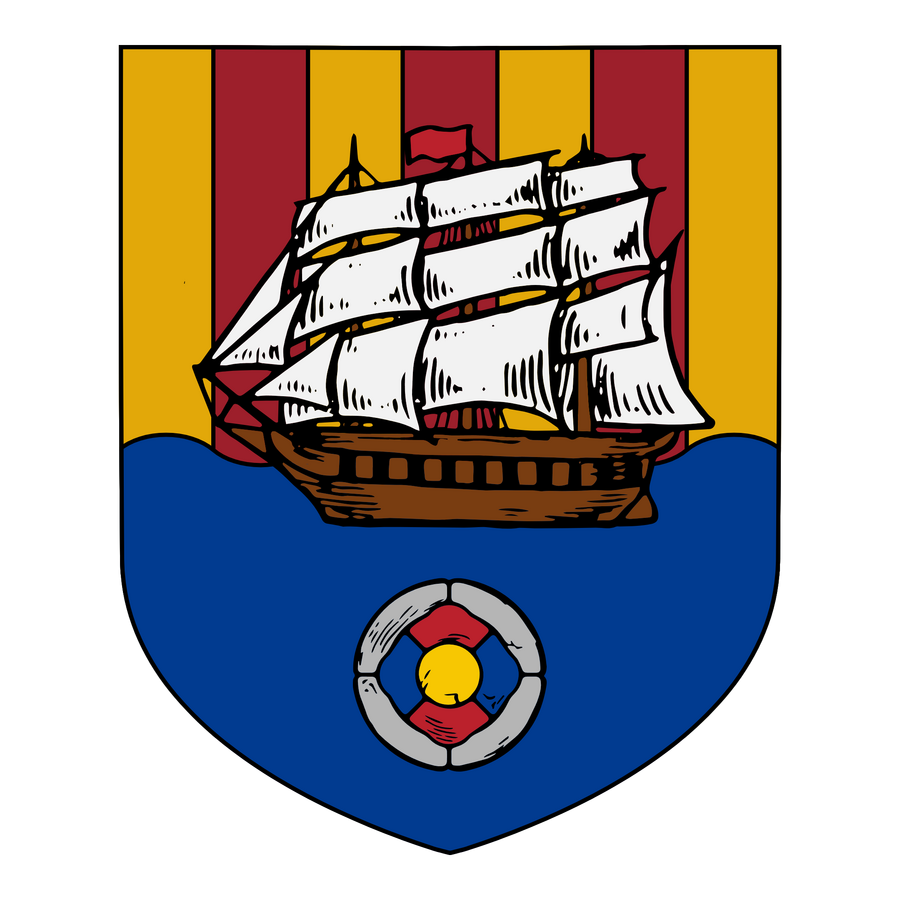
Zahar
Free Cities of the Gilded Coast
Zahar is a loose coalition of wealthy and fiercely independent city-states spread across the Gilded Coast and the caravan routes that snake throughout the region. No single ruler governs them; each city is led according to its own laws, councils, and political traditions, although mercantile guilds and wealthy estates bloated by commerce typically occupy the highest echelons of Zaharian society. Their culture is notably secular and cosmopolitan, and their cities are shaped by crowded ports, massive markets, and the constant exchange of goods and ideas. Its people prize wit and personal ambition, cultivated by the freedom enjoyed from Qadaran supremacy and the tyranny of the Eisandric crowns. Currently, the Free Cities remain prosperous and influential, though their rivalries often prevent them from consolidating power even in the face of a common threat.
The People of the Far north
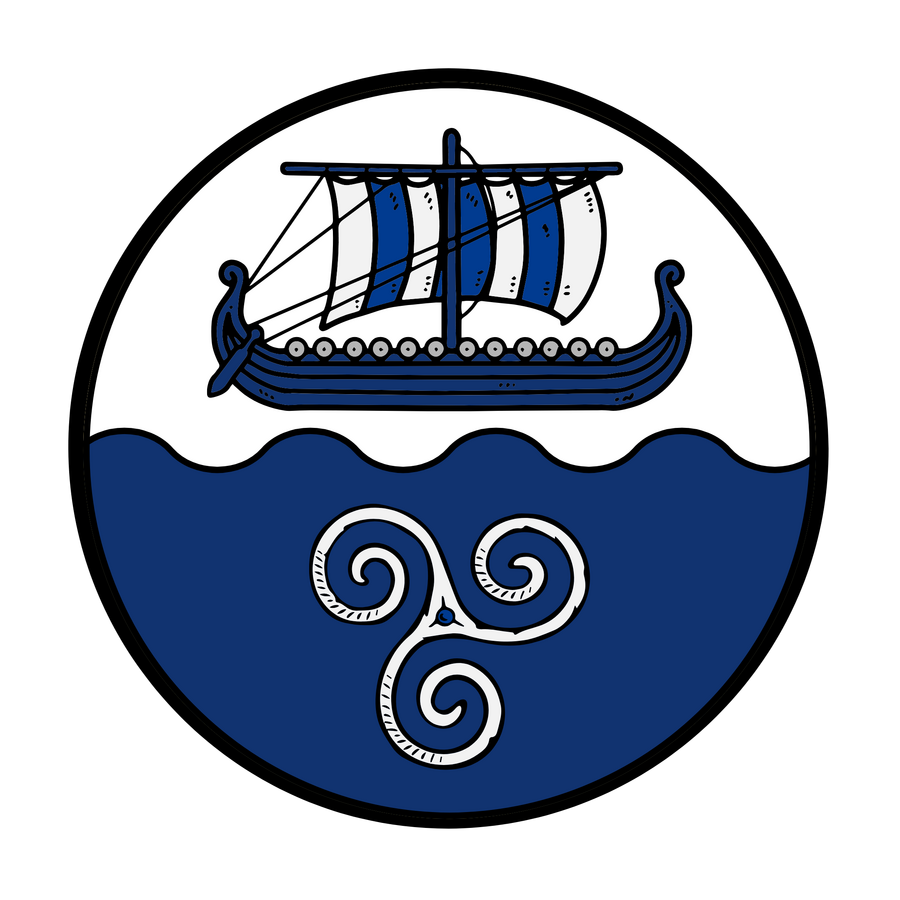
The Pale
The Frozen Wastes
The Palemen are the crownless, lawless people of the Pale, the vast northern fringes of Eisandor where frozen seas, black-pine forests, and open tundra stretch endlessly beneath aurora-haunted skies. Like the Zaharians of the far south, they acknowledge no single king; they gather beneath jarldoms, mountain clans, and marauding warbands whose leaders rule only so long as strength and loyalty sustain them. Although Palemen culture can largely be characterized by their obsession with courage, commitment to vengeance, and mastery over the frozen rivers that course through the tundra like open veins, it is freedom from distant authority that they are most proud of. In the present year, they remain divided but conquered. They busy themselves with rebuilding after the Second Deadwinter of 1585 S.C., which originated in the snow-capped peaks of the Alabaster Spire. Before, they had contented themselves with either fighting among each other or journeying south to raid the northernmost borders of Nordovia. So long as they can retain the sovereignty of disparate clans defending scattered strongholds, however, they are content with battling both undeath and the nightmarish abominations that make their home within the Pale.
The Clans of Steppe and Stone
Coming soon.
The Children of the Vaern
Coming soon.
The Heirs of the Aelvar
Coming soon.
The Chronicles of Caeroth
The Road to Caernia
© 2026 C. A. Quezada. All rights reserved.
Art by William R. Liberto
From the Imperial Cartographer's Guild
THE REALMS OF EISANDOR
Caeroth is an ancient world shaped by the Sundering, when the powers of Order and Disorder tore creation into rival realms of faith, magic, and feuding cultures. At its heart lies Eisandor, a broad temperate continent of feudal kingdoms, ruined empires, mountain holds, elder forests, and contested frontiers. In the Pale, the Vargyr northmen contend with undeath in their bid for survival in a frozen wasteland. Its human crowns share the land with the mountain dwarves of the Stonecrowns, the hill dwarves of the Red Hills, and the wild dwarves of the Eisandric hinterlands. The high elves of Vaeloria seclude themselves from the world while the wood elves of Eldervorn emerge from their own isolation, warring with the human realms as they encroach upon their sacred groves. The sea elves of drowned Thaelassar defend themselves from the holy crusades of the Qadaran fleets, while the Free Cities of Zahar make their fortune upon the distant southlands of the Gilded Coast. When the orcish clans of steppe and stone are not quarreling with one another, their invasions have broken kingdoms and forced entire civilizations into obscurity.In the south stretches Azhakar, a vast land of sun-scorched deserts, impossibly vast swathes of jungles, and a realm dominated by the wyrm-kin of Drakkorath that are seldom seen beyond its borders. To the far west lies Jambhara, a humid continent of monsoon coasts, jungle kingdoms, towering temple-cities, and forgotten beast-civilizations buried beneath forests older than human memory. Farther still from the ordered world broods Uldarath, a blighted continent in the distant east divided among warring Uldaric powers. Its landscapes are warped by blood, flame, and primordial corruption that seeks to escape its earthly shackles and devour the world. Prophecy warns that should its rival hosts ever unite, an endless darkness would cross the seas and consume Caeroth beneath it, but even the most long-lived of elves and dwarves have begun to forget this terrible omen.
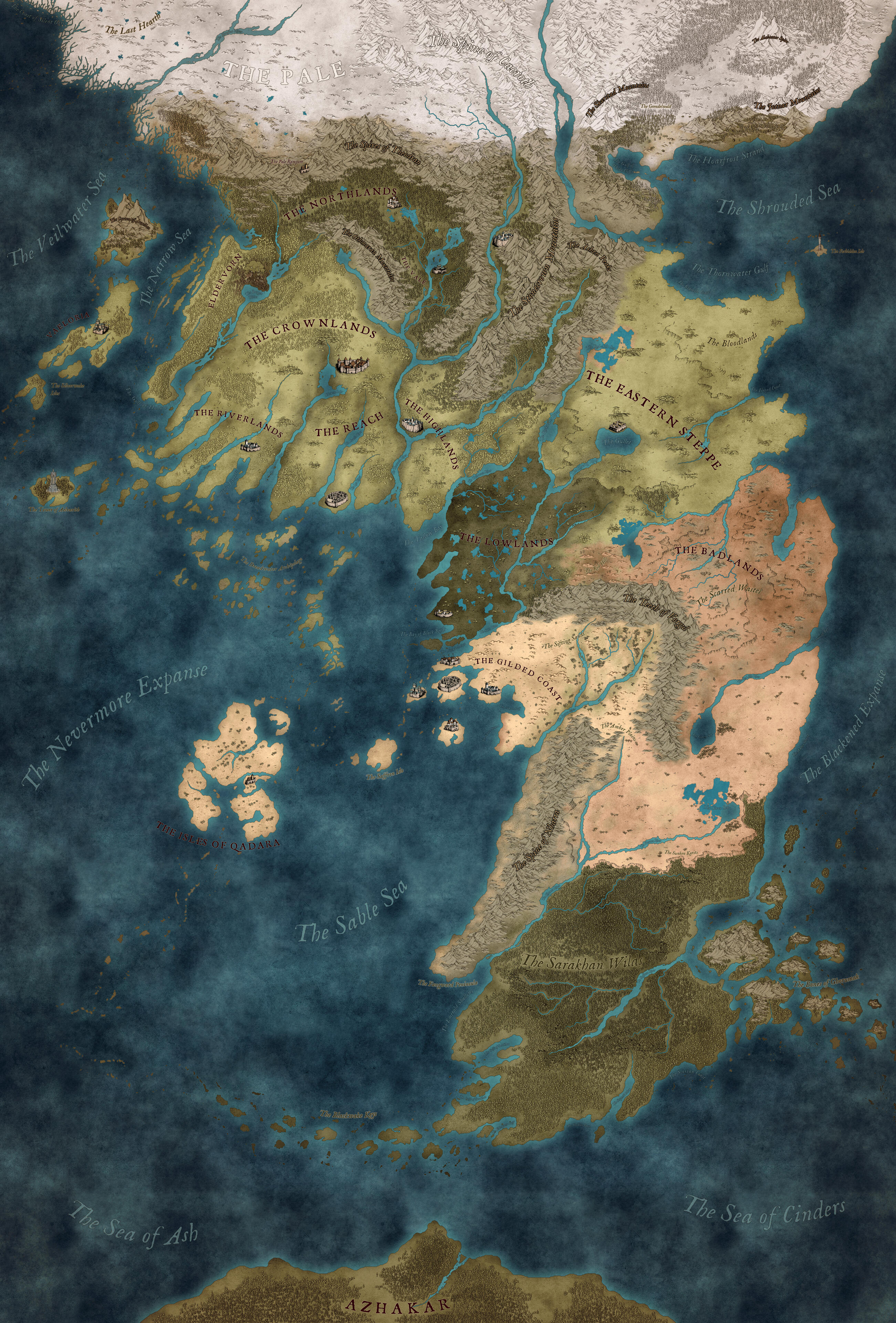
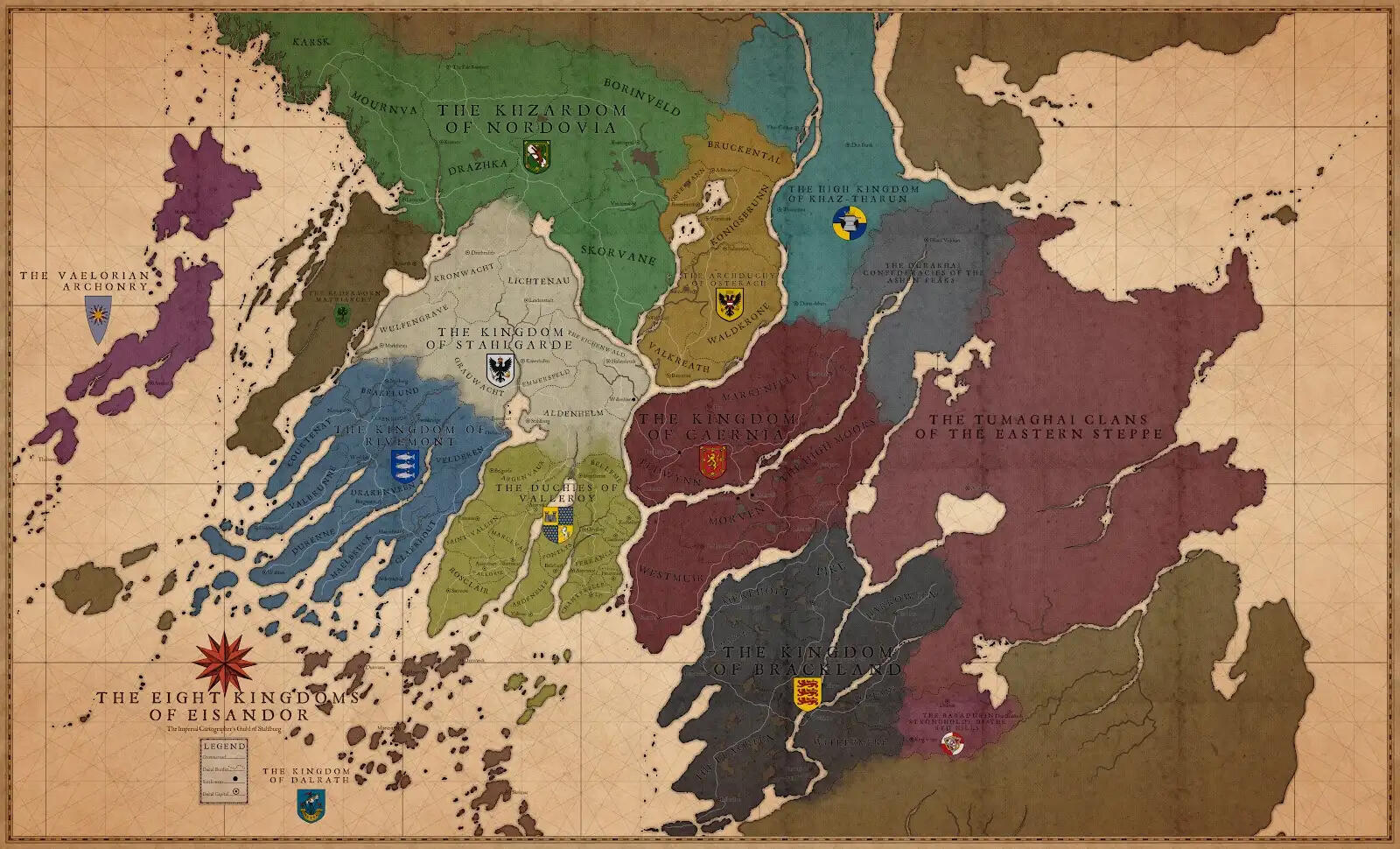
The Realms of Eisandor by Old Clanka Cartography
POPULATION ESTIMATES
The Eight Kingdoms of Man
| Kingdom | Area (mi²) | Population | Density / mi² | Strength† |
|---|---|---|---|---|
| Stahlgarde | 225,000 | 21.0m | 93.3 | 120,000 |
| Valleroy | 205,000 | 18.5m | 90.2 | 105,000 |
| Rivemont | 265,000 | 15.5m | 58.5 | 90,000 |
| Osterach | 170,000 | 13.0 | 76.5 | 85,000 |
| Caernia | 325,000 | 10.0m | 30.8 | 80,000 |
| Nordovia | 455,000 | 9.0m | 19.8 | 70,000 |
| Brackland | 285,000 | 8.0m | 28.1 | 52,500 |
| Dalrath | 90,000 | 5.0m | 55.6 | 35,000 |
| TOTAL | 2,020,000 | 100.0m | 49.5 | 637,500 |
THE REST OF EISANDOR
| Kingdom | Area (mi²) | Population | Density / mi² | Strength† |
|---|---|---|---|---|
| High Elves of Vaeloria | 170,000 | 15.0m | 88.2 | 100,000 |
| Wood Elves of Eldervorn | 175,000 | 12.0m | 68.6 | 75,000 |
| Mountain Dwarves of Khaz Tharun | 625,000 | 30.0m | 48.0 | 275,000 |
| Hill Dwarves of the Red Hills | 48,000 | 5.0m | 104.2 | 60,000 |
| Wild Dwarves of the Hinterlands | — | 3.0m | — | — |
| Orcs of the Eastern Steppe | 630,000 | 20.0m | 31.7 | 350,000 |
| Mountain Orcs of the Ashen Peaks | 150,000 | 12m | 80.0 | 210,000 |
| TOTAL | 1,798,000 | 102m | 70.1 | 1.07m |
† Estimations of the absolute uppermost limits of a realm's ability to muster
The Chronicles of Caeroth
The Road to Caernia
© 2026 C. A. Quezada. All rights reserved.
Art by William R. Liberto
The Chronicles of Caeroth
The Road to Caernia
© 2026 C. A. Quezada. All rights reserved.
Art by William R. Liberto
THE THREE GREAT POWERS
THE MAGIC OF CAEROTH
Before the world was ordered, existence was without fixed shape: a vast, unbounded potential over which the Sovran and the Uldar contended. The Sovran answered chaos with the Light, imposing law upon the void until time began, matter held, flesh took form, and death became a threshold rather than an endless dissolution. The Uldar resisted that ordering, and from them came the Dark: the ancient force that remembers what creation was before boundary, measure, and name. Where the Light preserves the world as the Sovran made it, the Dark seeks to loosen it back into hunger and ruin. The Arcane lies beneath both conflict and creation itself, the battlefield upon which these primordial faces waged war over the fate of the cosmos and the world birthed from it.In the current era, their practitioners reflect the nature of the powers they bear. The Light is carried by the paladins and clerics of the Palatine Orders, whose vows bind faith to discipline beneath the authority of the Sacred Concord. The Dark passes through warlocks among the orcish clans and the hidden cults of the Uldar, where power is granted through nefarious bargains with corruptive powers. The Arcane belongs to those rare minds able to perceive the grammar beneath the world: the magi of the Tower of Orentia, who cage it in law and formula, and the elven magisters of Vaeloria, whose ancient arts remember harmonies mankind learned only in fragments.
THE RADIANT LIGHT
The light of the Divine
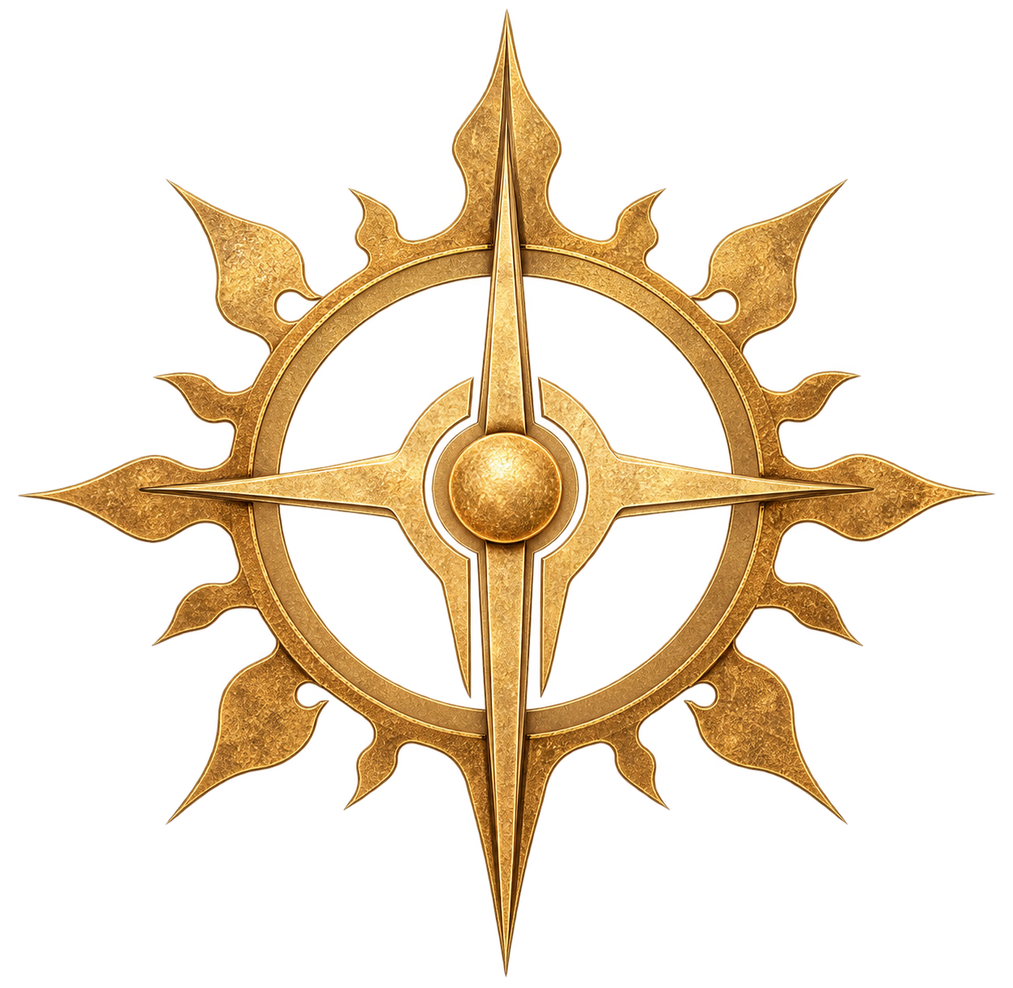
The Radiant Light is the ordering power of the Sovran, the gods of order. Through it, creation was bound into law, form, time, flesh, death, and hierarchy. It is not drawn from study or blood, but from conviction made absolute. In merciful hands, the Light may mend what is broken; in wrathful hands, it may burn away what refuses order. It does not belong only to the gentle. It answers certainty as much as compassion.
THE PRIMORDIAL DARK
THE DARKNESS OF CHAOS
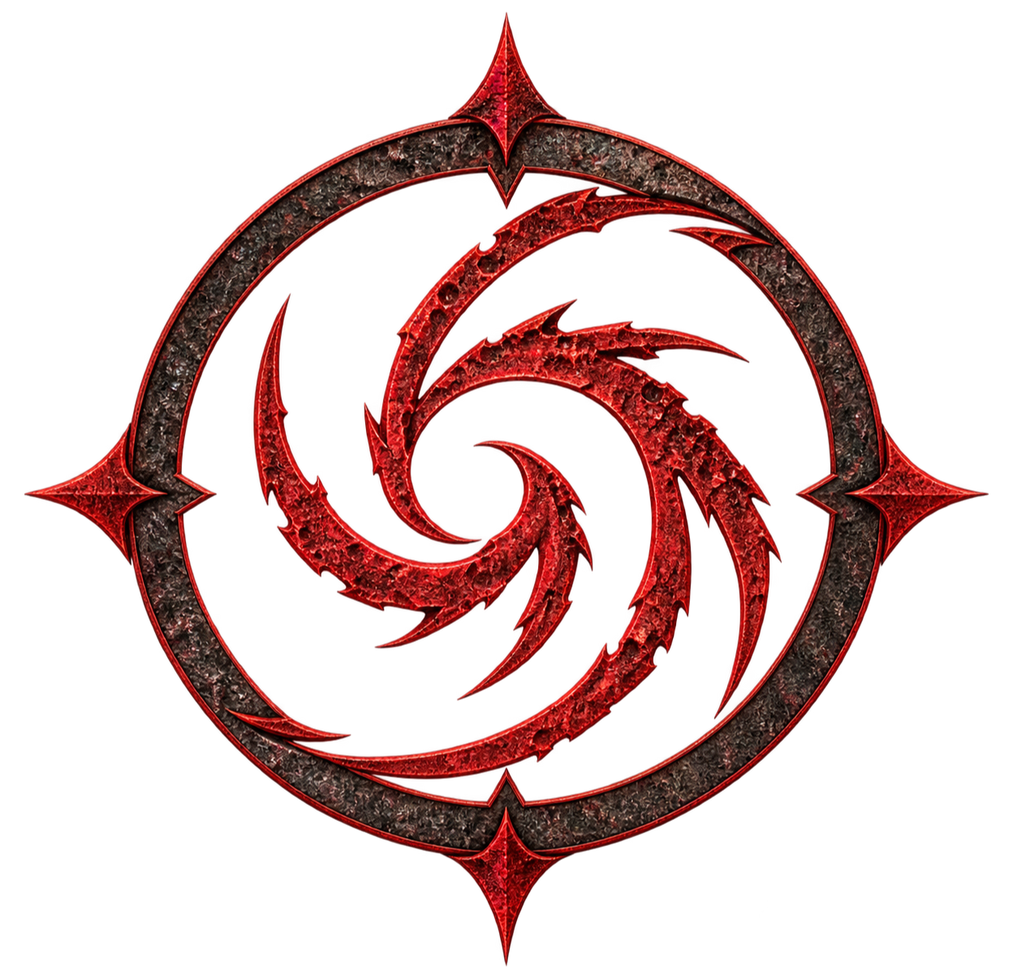
The Primordial Dark is the power of the Uldar, the gods of disorder. Where the Light binds, the Dark loosens the shape of things until flesh, will, and soul no longer remember what they were meant to be. No one truly masters it. The Dark is bargained with, surrendered to, or endured until its hunger becomes indistinguishable from the desires of its servant. Its gifts come quickly, but they always leave something of the self behind.
THE UNBOUND ARCANE
THE LANGUAGE OF CREATION
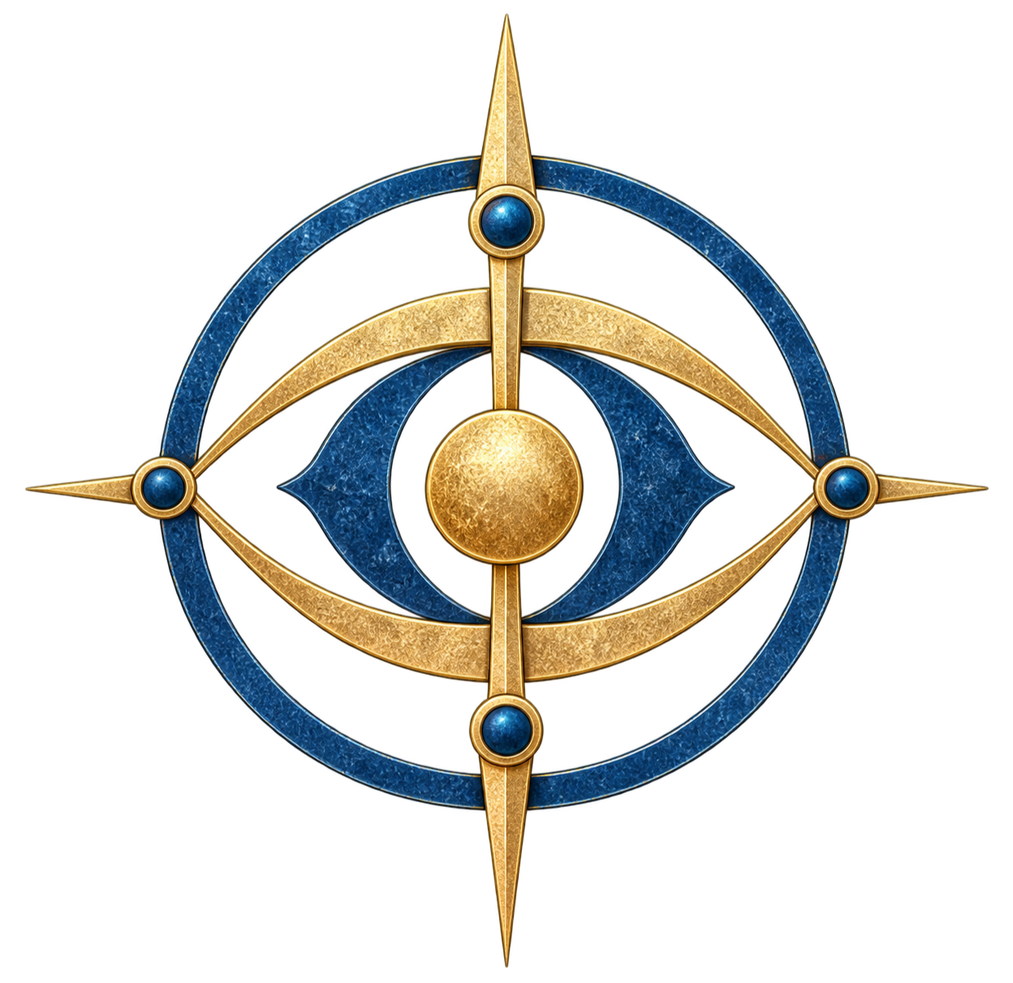
The Unbound Arcane is the formless potential beneath created reality. The Sovran did not create it, but bound it into the ordered world, where it became legible through measure, symbol, word, and will. Arcane magic allows mortals to read the hidden structure of creation and impose brief revisions upon it. In disciplined hands, it can preserve what would otherwise fail; in proud hands, it consumes minds already overcome with hubris.
The Chronicles of Caeroth
The Road to Caernia
© 2026 C. A. Quezada. All rights reserved.
Art by William R. Liberto
| Kingdom | Area (mi²) | Population | Density / mi² | Martial Strength |
|---|---|---|---|---|
| Stahlgarde | 225,000 | 21.0m | 93.3 | 120,000 |
| Valleroy | 205,000 | 18.5m | 90.2 | 105,000 |
| Rivemont | 265,000 | 15.5m | 58.5 | 90,000 |
| Osterach | 170,000 | 13.0 | 76.5 | 85,000 |
| Caernia | 325,000 | 10.0m | 30.8 | 80,000 |
| Nordovia | 455,000 | 9.0m | 19.8 | 70,000 |
| Brackland | 285,000 | 8.0m | 28.1 | 52,500 |
| Dalrath | 90,000 | 5.0m | 55.6 | 35,000 |
| TOTAL | 2,020,000 | 100.0m | 49.5 | 637,500 |
The Chronicles of Caeroth
The Road to Caernia
© 2026 C. A. Quezada. All rights reserved.
Art by William R. Liberto
The Chronicles of Caeroth
The Road to Caernia
© 2026 C. A. Quezada. All rights reserved.
Art by William R. Liberto